
Type “Asian woman” into an image generator and you may get a polished picture almost immediately. That speed is impressive. The less impressive part is how often a broad description produces a narrow idea: similar faces, familiar outfits, the same carefully arranged lighting.
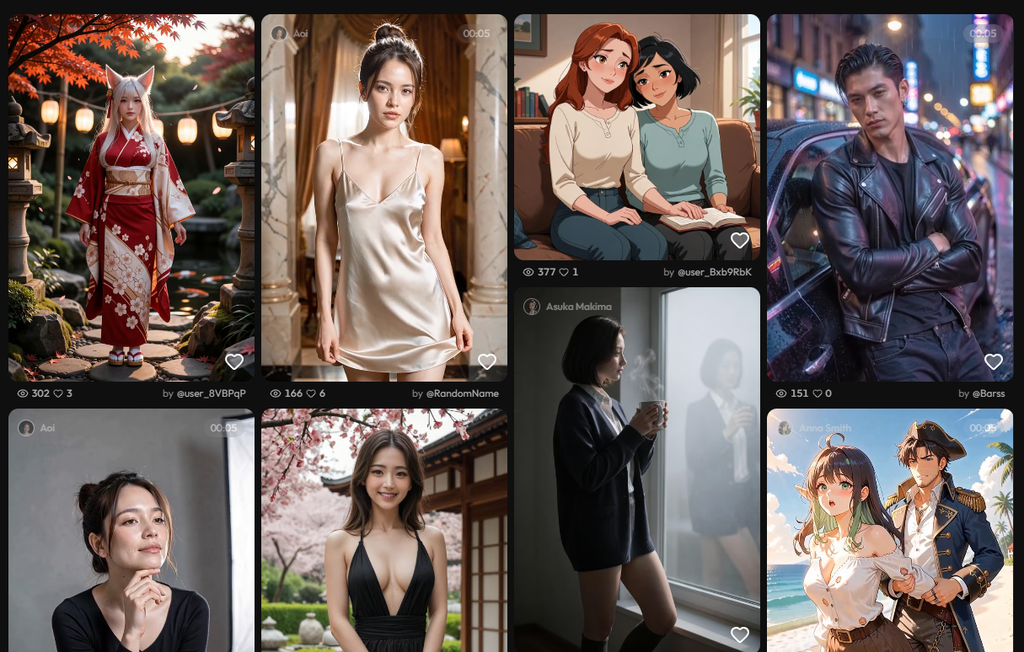
The problem starts before the image appears. Asian describes people across many countries and communities. It tells a generator little about the character you actually have in mind. If the result feels generic, adding more technical detail to the prompt may not help. You may need to make more creative decisions first.
This matters in adult image generation, where a character’s appearance is often the point of the exercise. It also matters outside it. A tool that falls back on visual clichés can make an invented person look less distinct, however sharp the final image is.
A broad label gives the software room to guess
Suppose you want to create a fictional adult character. You can specify a setting, hairstyle, expression, clothing and visual style. Or you can provide a broad category and let the software fill in the rest.
The second option is faster. It also hands many decisions to a system whose choices may be hard to see until several images sit next to each other. Why does every character have the same smooth face? Why has a particular costume appeared when nobody asked for it? Why do the backgrounds seem to belong to one imagined version of Asia?
An exploratory 2025 study invited East Asian participants to examine images from three generators. The researchers identified perceived biases that included the misuse of cultural symbols, sexualisation and racial stereotypes. It was a focused examination of particular models and participants, not a measurement of every generator on the market. Its useful observation is that the details an AI adds can change how the person in the image is represented.
None of this means a user needs to write a history lesson before making an image. It means “Asian” is rarely enough of a character description. A fictional person becomes more interesting when they have features and choices that belong to them, rather than a stack of signals chosen to make a category instantly recognisable.
Try asking a simpler question before generating anything: what would you remember about this character if the image had no label? Perhaps it is their reserved expression, a distinctive jacket or the way they stand. Those details give the image a direction. A regional label alone leaves the tool to invent one.
The setting deserves as much attention as the face
A background can turn a careful portrait into a cliché. A character may be dressed for an ordinary evening, yet the generator places them beside a lantern, in a temple courtyard or on a neon street. Each setting might work for a particular story. Repeating them whenever a prompt mentions an Asian person makes them visual shorthand.
Specificity helps. If you want a crowded modern apartment, describe it. If the story takes place at a recording studio, give the room cables, chairs and equipment. If the background has no role, keep it plain. The result may feel more convincing because the character is allowed to occupy a space chosen for the scene, rather than for an assumed identity.
Lighting and style matter too. An illustrated character can carry details that would look out of place in a realistic photograph. A portrait can be quiet and ordinary without being dull. The choice depends on what you want the image to do.
PornAsia’s article on tools built for adult creators discusses how much control users want over style and production. That question becomes sharper when the subject is a person. Control means more than changing a colour palette. It includes noticing when a tool has supplied an unwanted assumption and deciding whether to keep it.
One useful habit is to compare results for consistency. If you ask for several images of the same invented character, do you recognise them each time? Or does the person change whenever the generator changes the scene? A striking first result is easy to admire. A character who holds together across images takes more attention.
An invented character should stay invented
There is a clear difference between describing a fictional adult and uploading a photograph of someone you know. The first asks a tool to help make a character. The second brings a real person into the process, with their own expectations about how their image may be used.
A public profile picture is still somebody’s picture. Being able to view or save it does not mean that person agreed to appear in sexual material. That remains true even if the finished image is artificial and the surrounding scene is invented.
The concern has moved well beyond hypothetical examples. In January 2026, WIRED examined non-consensual edits of women’s images made with Grok, including changes to religious and cultural clothing. That reporting concerned a particular tool and set of observed images. It shows why both consent and cultural context matter when an AI system can alter a recognisable person so quickly.
For a fictional adult character, there is no need to borrow a stranger’s face. You can decide what the character looks like from the beginning and revise the result when it drifts. The freedom to invent is one of the more useful things image generation offers.
Adult services also need clear boundaries of their own. A user should be able to find out whether a platform accepts reference photos, what rules apply to identifiable people, how it handles reports and how it restricts access to adult content. A promise of creative freedom does not answer those questions.
Better images begin with better decisions
The supplied joi.com link is intended for an Asian-themed AI adult-image page. As with any generator in this category, the important creative choice comes before pressing a button: are you building a particular fictional adult, or leaving the tool to assemble a person from a broad label? The page itself could not be opened during this check, so its available controls and current content should be confirmed before publication.
If an image looks generic, start with the character rather than another adjective about ethnicity. Decide how they dress, what expression suits them and where the scene takes place. Look at what the tool added without being asked. Keep the useful surprises; reject the ones that turn a person into a collection of familiar props.
That process may take longer than accepting the first polished result. It is also where the user contributes something the generator cannot supply on its own: a reason this character looks this way.
The finished image might show an invented adult leaning against a kitchen counter, waiting for a kettle to boil. No symbolic backdrop. No costume selected by a stereotype. Just a person whose face, posture and surroundings belong to the same idea. That is a much harder image to make than a generic one, and a better reason to keep it.